
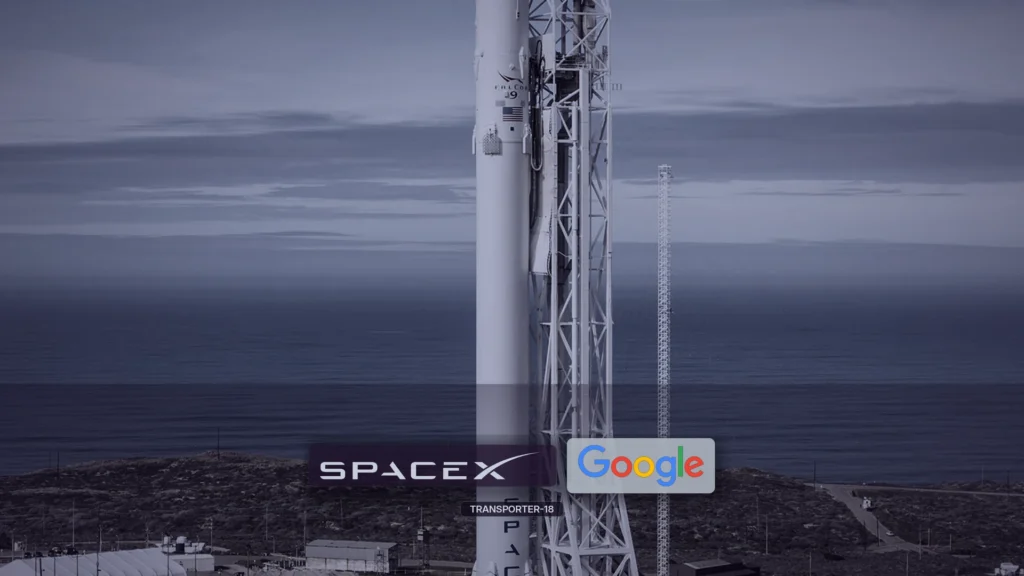
SpaceX’s Transporter-18 rideshare is scheduled to lift off Thursday from Vandenberg Space Force Base carrying Planet Labs satellites that include a solar-powered prototype equipped with Google tensor processing units, marking the first planned in-orbit test for Alphabet’s Project Suncatcher.
CNBC reported that the uncrewed Falcon 9 flight is scheduled for 11:15 a.m. PT from the California base. Space.com said SpaceX’s 58-minute launch window opens at 11:18 a.m. PT (2:18 p.m. ET). The brief treats the loft as planned only; liftoff, deployment, and on-orbit operations are not confirmed here.
CNBC said the mission will carry Planet Labs satellites, including the solar-powered prototype with Google’s TPUs, and will mark the first in-orbit test for Project Suncatcher, a moonshot Alphabet first revealed in November 2025 to develop reliable, solar-powered AI computing infrastructure that can operate continuously in space. In a post announcing the launch plan, Alphabet said the project is a means of “exploring whether space could one day host scalable machine learning infrastructure.” Alphabet also said low Earth orbit satellites can “access near-constant sunlight, generating up to eight times more solar power than on Earth,” and that it eventually expects to “link together multiple constellations of satellites, allowing them to manage larger AI workloads while in orbit.”
The Google parent has already tested its TPUs running AI workloads at the University of California at Davis, CNBC said, but does not yet know how the chips will perform in low Earth orbit. Space.com described the pathfinder as helping the team assess how TPUs withstand space radiation and how efficiently they shed heat.
Thursday’s loft is the launch-day vehicle and partner brief for a mission Google readied as a Project Suncatcher path in late September. Alphabet holds a stake in SpaceX valued at more than $82 billion, CNBC reported. SpaceX has separately promoted orbital supercomputers and, per CNBC, COO Gwynne Shotwell said in September the company will deploy “supercompute in space” in 2027.