
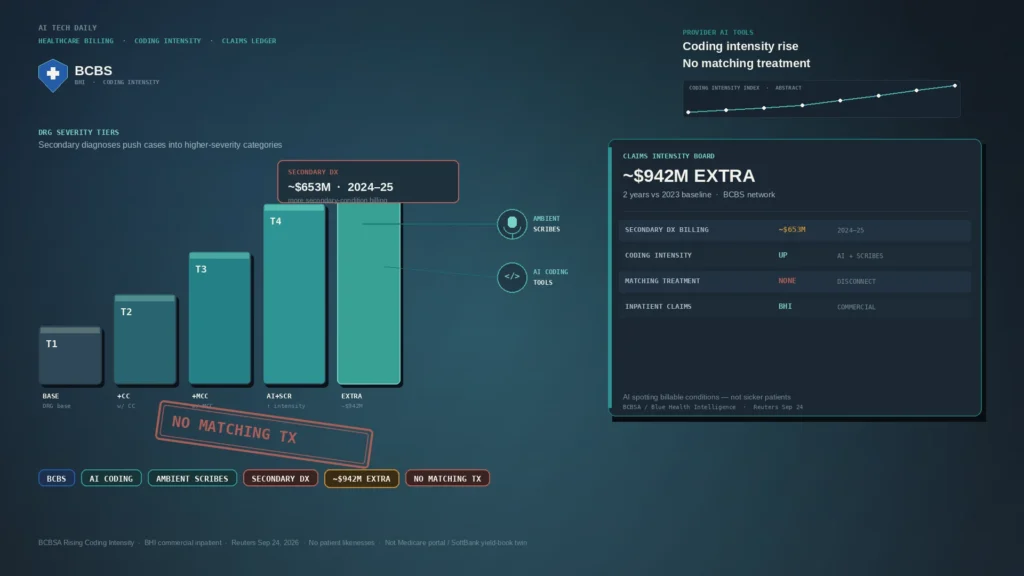
Provider AI coding tools and ambient scribes are linked to higher billing intensity that added about $942 million in costs for Blue Cross Blue Shield companies over two years versus 2023, a Blue Cross Blue Shield Association study finds, Reuters reported.
Between 2024 and 2025, providers more often billed for secondary conditions, driving about $653 million of that increase for BCBS firms in the period, the study said. Overall, more intense documented care contributed $942 million versus the 2023 baseline. BCBSA said hospitals used AI to spot secondary conditions by scanning patient records or via ambient scribes that listen to clinical conversations and draft notes. Visits coded as more complex draw higher insurer payments; in inpatient settings, secondary or coexisting conditions can push cases into higher-severity categories.
The analysis covers inpatient billing where patients were admitted to medical facilities or hospitals. BCBSA represents a network of independent health insurers covering more than 100 million people, a representative told Reuters. A Blue Health Intelligence analysis of commercial inpatient claims, detailed in the associations Rising Coding Intensity brief, ties the coding shift to wider hospital use of ambient listening and autonomous coding tools.
For major bowel surgeries, secondary conditions such as partial intestinal blockages and acid overload rose 55% and 33%, respectively, from the first quarter of 2023 to the fourth quarter of 2025, Reuters said. Dr. Razia Hashmi, BCBSA vice president of clinical affairs, said more complex coding did not line up with higher treatment rates; anemia diagnoses, for example, were not matched by more blood transfusions.
“If patients are truly sicker, we’d expect to see more treatment,” Luke Chalker, BCBSA senior vice president of product and data science, told Reuters. “The disconnect between diagnoses and treatment suggests that AI is identifying more billable conditions, not sicker patients.”
Centene and other insurers have separately said health-system AI tools can lead to aggressive or inappropriate reimbursement claims, Reuters noted.